Within this blog, I am going to be analyzing four strands of language: Media Studies, Reading, Writing, Oral Communication.
Media Studies:
Media studies is one of four key strands within the Ontario Language Arts Curriculum. These strands are developed to provide essential skills for all grades. The Media studies strand is developed to incorporate the understanding and critical thinking of a variety of media sources eg, news, videos, images, etc.Within a 21st-century school media studies has become more important than ever. With the mass amount of media content students face every day, the critically engaging students in media studies can help the student determine what sources are valid or not. Within the Media Studies strand, there is an emphasis on communication skills. "Communication skills should include the ability to critically interpret the messages they receive through the various media and to use these media to communicate their own ideas effectively as well. Skills related to high-tech media such as the Internet, film, and television are particularly important because of the power and pervasive influence these media wield in our lives and in society" (Ontario Language Arts Curriculum).
To help further expand on media studies within the classroom, I have a decided to use a video clip. Teachers should consider the use of Media in the form of videos; as media can be an excellent resource for sharing ideas to a diverse set of learners.
Two essential aspects of media studies are media literacy and digital literacy. Media literacy is the ability to critically analyze messages in a wide variety of media types. Digital literacy refers to the students' ability to effectively locate and evaluate information digitally. Digital literacy also refers to the students' ability to produce and communicate digital content clearly. This can range from writing a blog post to creating and uploading a YouTube video.
-The Media studies strand has four overall expectations, these include the following:
1. demonstrate an understanding of a variety of media texts;
2. identify some media forms and explain how the conventions and techniques associated with them are used to create meaning;
3. create a variety of media texts for different purposes and audiences, using appropriate forms, conventions, and techniques;
4. reflect on and identify their strengths, areas for improvement, and the strategies they found most helpful in understanding and creating media texts.
Frank Baker a blogger found on the Blog Middle Web: All about the middle grades, provides educators with multiple resources for teaching media literacy. One of the many things he touches upon includes engaging students in advertisement analysis. He stresses the importance for teachers to look at advertisements with their students. He provides educators with a variety of video clips that they can use in their classroom in order to deconstruct these advertisements. One particular example he provides is an excerpt from the documentary "Social Reality". This video reveals tricks that advertisers use to trick the buyer. Teachers can use this video to teach students the tips and tricks that advertisers use in order to analyze and create their own advertisements.
Activity example: A series of lessons that encompass Baker's resource and curriculum expectations includes examining food advertisements. Teachers may split students up into categories such as fast food and healthy food asking students in each group to locate an advertisement and analyze the message associated with the advertisement. Once students share their findings teachers can prompt students to explain why and how these messages are conveyed in the advertisement. Teachers and students can then the documentary clip from 'social reality" in order to record a list of tricks that advertisers use within their media message. After the teacher and students have done this they may use this information and the list they have compiled to deconstruct a variety of commercials, together pulling out the main message and how these messages are communicated.
After this teachers may engage students in a discussion surrounding the implications of these advertisements on youth their age. "How does this advertisement affect me and my choices?" As an extension teachers might then ask students to create their own digital media message that encourages youth their age to make healthy eating choices. This might include a commercial or an advertisement flyer. At the end of this task students can complete a gallery walk and record an analysis of each groups product. Identifying the message and how that message is conveyed. This form of peer assessment can help peers practice their critical thinking skills and identify their strengths and weaknesses in regards to producing media texts.
Thank you for checking out my blog! Don't forget to come back for more!!
References
Baker, Frank. Using Short Video Clips to Teac Media Literacy. Retrieved fromhttps://www.middleweb.com/37862/using-short-video-clips-to-teach-media-literacy/
Ministry of Education (2006) Ontario Language Arts Curriculum. Retrieved from http://www.edu.gov.on.ca/eng/curriculum/elementary/language18currb.pdf
Welcome to my first blog post!!
Within this blog, I am going to be analyzing four strands of language: Media Studies, Reading, Writing, Oral Communication.
Reading:
Welcome back to my blog! I hope you enjoyed the last post and have a better understanding of media literacy. This week we are going to investigate reading.
Reading is an important aspect of the Ontario curriculum; an emphasis is placed on reading to help the student further learn new information. The curriculum states "An effective reader is one who not only grasps the ideas communicated in a text but is able to apply them in new contexts. To do this, the
reader must be able to think clearly, creatively, and critically about the ideas and information
encountered in texts in order to understand, analyze, and absorb them and to recognize
their relevance in other contexts" (p.11). Similarly, in the Ontario curriculum sets out 4 overall expectations that each student should be able to accomplish by the end of a given course. These include
"Students will: 1. read and demonstrate an understanding of a variety of literary, graphic, and informational texts, using a range of strategies to construct meaning; 2. recognize a variety of text forms, text features, and stylistic elements and demonstrate understanding of how they help communicate meaning; 3. use knowledge of words and cueing systems to read fluently; 4. reflect on and identify their strengths as readers, areas for improvement, and the strategies they found most helpful before, during, and after reading" (p.12).
 |
Learning and teaching students how to read along with reading skills can be more than traditional novel study or follow along reading. Student engagement is an important aspect of reading. When students are engaged with the topic they often have a higher success rate. One can present different forms of text to the students that still cover the overall expectations of the curriculum. In the online blog Playful Learning, it provides examples of why an instructor/ parent may use graphic novels to learn reading skills. this blog provides 5 reasons to encourage the use of graphic novels regarding reading:
1. Images give an overview of the story. 2. they are fast paced 3. The images reinforce not replace the language. 4. The language is high quality. 5. They can be read over and over
As seen in the video below it gives an insight into the importance of comics and graphic novels. One important part to note is the connection for using graphic novels to begin understanding more complex and mature subject matter. Likewise, it gives students the ability to connect ledger reading to required reading. To the video uses the example of Persepolis by Marjane Satrapi a graphic novel about the post-revolutionary Iran. This can be used as a jumping off point to connect to cross-curricular work, such as the use of literature in social studies.
Being in a 21st century classroom teacher's can use online sites to assist them in there own learning. There are many great sites for teacher leaning one being Pinterest, for the topic of graphic novels one can find an entire page dedicated to educational graphic novels and ways to use them in a verity of subjects. I provided a link below to one of many of the online resource to brows and purchase a verity of different graphic novels that can be helpful when teaching a new subject, or that the teacher would keep in the class room for silent reading. By providing your classrooms with a variety of graphic novels students are self encouraged to read and develop reading skills.
 |
| https://www.pinterest.com/pin/384283780699030717/ |
Playful Learning.5 GREAT REASONS TO READ GRAPHIC NOVELS. Retrieved from https://www.playfullearning.net/resource/5-great-reasons-read-graphic-novels/
Stevens, Keyana. 5-Minute Film Festival: Comics in the Classroom. Retrieved from https://www.edutopia.org/blog/five-minute-film-festival-comics-classroom
Pinterest. Graphic Novels for Kids: The 13 best graphic novel series. Retrieved from https://www.pinterest.ca/pin/384283780699030717/
Stevens, Keyana. 5-Minute Film Festival: Comics in the Classroom. Retrieved from https://www.edutopia.org/blog/five-minute-film-festival-comics-classroom
Pinterest. Graphic Novels for Kids: The 13 best graphic novel series. Retrieved from https://www.pinterest.ca/pin/384283780699030717/
Ministry of Education (2006) Ontario Language Arts Curriculum. Retrieved from http://www.edu.gov.on.ca/eng/curriculum/elementary/language18currb.pdf
Thomson, M. (2009). Models of memory. (pp. 165-178). The psychology of dyslexia: A handbook for teachers. 2nd Edition. Maldon, MA: Willey-Blackwell
Gambrell, L. B. (2011). Seven rules of engagement: What's most important to know about motivation to read. Reading Teacher, 65(3), 172-178.
POW!!. 5-Minute Film Festival: Comics in the Classroom. Online Image. Retrieved from https://www.edutopia.org/blog/five-minute-film-festival-comics-classroomThomson, M. (2009). Models of memory. (pp. 165-178). The psychology of dyslexia: A handbook for teachers. 2nd Edition. Maldon, MA: Willey-Blackwell
Gambrell, L. B. (2011). Seven rules of engagement: What's most important to know about motivation to read. Reading Teacher, 65(3), 172-178.
Writing

Writing is a powerful tool used to communicate within the world, the Ontario curriculum recognizes the importance of writing and aims to provide students with the skills and tools needed to communicate and understand their thoughts through writing.
"Writing … provides students with powerful opportunities to learn about themselves and their connections to the world. Through writing, students organize their thoughts, remember important information, solve problems, reflect on a widening range of perspectives, and learn how to communicate effectively for specific purposes and audiences. They find their voice and have opportunities to explore other voices. By putting their thoughts into words and supporting the words with visual images in a range of media, students acquire knowledge and deepen their understanding of the content in all school subjects. Writing also helps students to better understand their own thoughts and feelings and the events in their lives" (Literacy for Learning: The Report of the Expert Panel on Literacy in Grades 4 to 6 in Ontario, 2004, p. 79 ).
Writing encourages 21st-century skills such as communication, collaboration, critical thinking and creativity. This can be seen through the overall curriculum expectations as they encourage teachers to develop teaching practices and activities that provide students with the opportunity to organize their ideas and communicate them clearly and effectively for a variety of purposes. The writing strand also provides the potential for students to build collaboration skills as they communicate their ideas and thoughts with others, and develop critical thinking skills to inform their opinions.
The Expectations
The Writing strand has four overall expectations.
1. Generate, gather, and organize ideas and information to write for an intended purpose and audience;
2. Draft and revise their writing, using a variety of informational, literary, and graphic forms and stylistic elements appropriate for the purpose and audience;
3. Use editing, proofreading, and publishing skills and strategies, and knowledge of language conventions, to correct errors, refine expression, and present their work effectively;
4. Reflect on and identify their strengths as writers, areas for improvement, and the strategies they found most helpful at different stages in the writing process.
Resources for Teaching Writing
The following is a Ministry monograph that provides educators researched based tips for teaching writing.
This monograph is titled What works? Research into Practice: Improving Student Writing. This resource focuses on the importance of teacher feedback on student writing in order to help students improve their writing. The resource provides strategies for educators that are applicable for grades 4-12.
According to this document, Teacher Feedback should be both criterion based (Based on the criteria/ rubric) and reader based (reflects the readers' experience). The document suggests that criterion-based feedback is most successful when educators make the success criteria explicit and clear to the students. This includes providing the students with the rubric beforehand so that they are able to develop a deeper understanding of the expectations. This form of feedback allows students to communicate and organize their writing better. Whereas reader-based feedback allows students to gain a deeper understanding of the intended purpose of their writing. Other components/types of feedback that are discussed include providing a space for feedback. Educators must create a safe and comfortable space where students are able to receive verbal feedback regarding their writing. Lastly, peer feedback is also essential and an important type of feedback for improving student writing. Peer feedback "helps to develop student writers’ sense of audience – their recognition of the perspectives, language, sentence structure, voice and other elements of writing that provoke, entertain or satisfy their audience" (Peterson, 2010).
Teaching the Writing Process
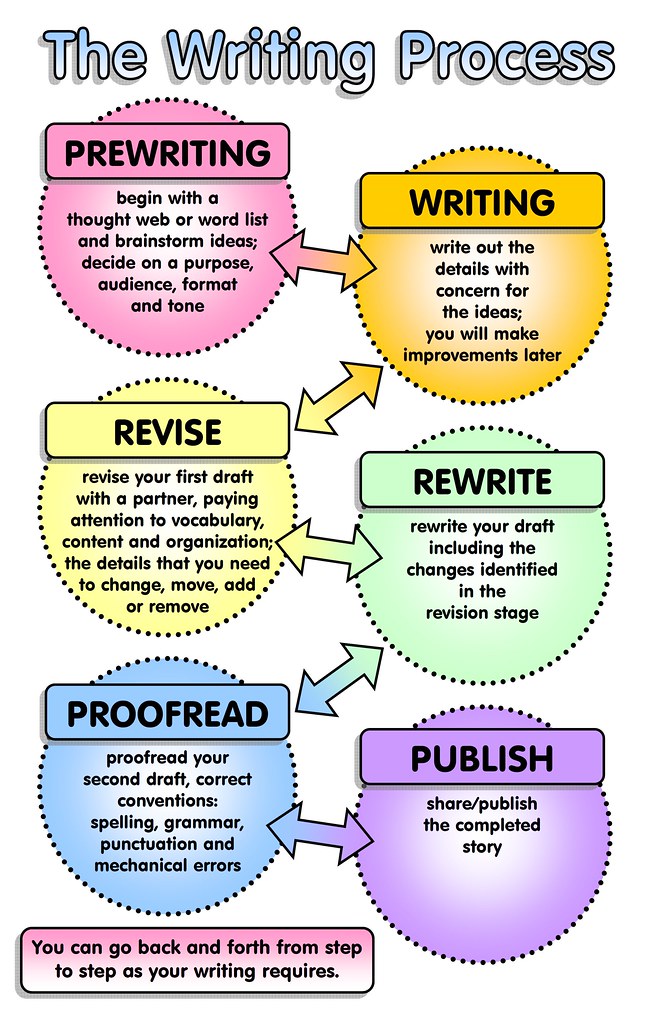
http://www.readingrockets.org/article/teaching-elementary-school-students-be-effective-writers
Reading Rockets: Teaching Elementary Students to be effective writers reminds teachers that they must provide adequate time for students to practice their writing. This resource provides tips for teachers to improve student writing. One of the tips includes teaching the writing process, this resource outlines 4 tips/practices teachers can incorporate within their classroom to teach the wringing process more effectively.
These tips include the following:
1. Teach students strategies for the various components of the writing process
2. Gradually release writing responsibility from the teacher to the student
3. Guide students to select and use appropriate writing strategies
4. Encourage students to be flexible in using components of the writing process
This resource is helpful to educators as it provides explicit strategies for teaching writing. it emphases the importance of teaching the writing process as a fluid process as well as the importance of metacognition during this process.
 Strategies for Teaching Writing
http://blog.brookespublishing.com/7-steps-to-teaching-writing-skills-to-students-with-disabilities/
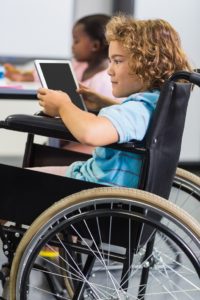
This resource Teaching Writing Skills to Student With Disabilities provides strategies and tips for teaching to better support students with disabilities within the classroom. One of the strategies I would like to highlight includes "Making writing meaningful". Making the writing meaningful to the student encourages engagement with the writing task. The resource suggests that teachers provide choice to the student and use prompts such as "which character would you like to write about?". The resource suggests that teachers pair these prompts with images to engage the student. For example, the teacher may show the student an image from the text with a variety of characters from the story and ask the student to select 1 or 2 to write about. Another strategy that I would like to highlight from this resource is immediate reinforcement this includes acknowledging and encouraging writing habits and skills when demonstrated. Students in the early stages of writing abilities may engage in pretend writing through scribbling or holding crayons/ materials it is important that educators recognize these advancements and encourage these skills through immediate praise.
Reference:
Literacy for Learning: The Report of the Expert Panel on Literacy in Grades 4 to 6 in Ontario, 2004, p. 79
http://www.edu.gov.on.ca/eng/literacynumeracy/inspire/research/WW_Improving_Student_Writing.pdf.
http://www.readingrockets.org/article/teaching-elementary-school-students-be-effective-writers
http://blog.brookespublishing.com/7-steps-to-teaching-writing-skills-to-students-with-disabilities/

Oral Communication
What is oral communication?
Oral communication as described by the Ontario Curriculum includes the skills required for expressing ideas, thoughts and opinions with clarity. Oral communication is an essential skill in the 21st century as there is a heavier focus on oral communication and collaboration. Students must learn these essential skills within the classroom learning how to articulate their thoughts and share them in a respectful and safe environment.
Overall Expectations
The Oral Communication strand has three overall expectations, as follows: Students will:
1. listen in order to understand and respond appropriately in a variety of situations for a variety of purposes;
2. use speaking skills and strategies appropriately to communicate with different audiences for a variety of purposes;
3. reflect on and identify their strengths as listeners and speakers, areas for improvement, and the strategies they found most helpful in oral communication situations.
Resources for Teaching Oral Communication
When exploring the EDUgains website I came across a resource titled Practice and Research Connections: Adolescent Literacy Voice and Idneitty. This resource is helpful for educators as it defines voice and identity in the classroom and provides teachers with strategies for creating safe and welcoming classrooms where students can share their opinions and ideas. One of the strategies provided is Accountable Talk. Accountable talk is talk by students and the teacher that responds to and builds on what others in the classroom have said. It is focused, meaningful, and mutually beneficial to the speaker and listener. “In a classroom filled with accountable talk, students... extend understandings by using the statements they have heard from their classmates to form new ideas” (Fisher, Frey & Rothenberg, 2008). Accountable talk builds/strengthens students listening and oral communication skills.
The resource also provides tips for assessing voice within the classroom. These tips include the following:
1. Establish a classroom community where students learn from each other (Lewis & Del Valle, 2009). 2. Ensure that all voices are heard (e.g., using turn-and-talk, think time, collaboration) (Riviere, 2008, Lyle & Hendley, 2010).
3. Teach skills for active and accountable collaboration (Ritchhart, 2002).
4. Connect curriculum to learning goals that students and teachers jointly construct (Schoenbach & Greenleaf, 2009).
5. Plan time for students to dialogue with peers to explore, reflect, question and extend their ideas.
Apps for teaching/assessing Oral Communication
Flipgrid is a website and Ipad application that teachers can use in the classroom. The resource allows teachers and students to record short (under 5 minute) videos of themselves speaking. These videos are uploaded to a secure classroom homepage (Accessed with a classroom ID and Password) where the teacher can view all the videos uploaded by the students. Flipgrid also includes options for the students of the class to view peer videos and leave peer feedback.
Teachers can use this resource in the classroom to assess students oral communication skills as students can orally record and upload their responses to particular questions. This resource is helpful as the teacher can return to the videos and rewatch them for assessment purposes. The teacher can highlight the particular oral communication skills that require more practice and development.
Videos and Videocasting are becoming increasingly more predominant today and this resource provides students with the opportunity to build digital literacy, collaboration, and oral communication skills. This resource is also an engaging way to have students present and share their ideas with the class as opposed to physical presentations.
Oral Communication Strategies
This government resource provides strategies for teaching to teach oral communication in the classroom. The document highlights that struggling students require explicit instruction, a safe environment, extra practice, peer and teacher support and modelling by peers and teachers.
A few teaching strategies/activities listed include
- Think pair share
- Take Five
- Timed retell
- Group discussion and Discussion Roles
- Placemat Activity
- Jigsaw
and many more.
Each strategy listed includes specific directions and tips for teachers. I found this resource very helpful as it states the purpose of each exercise and provides teachers with explicit examples of questions/ samples of how this activity could be used in the classroom. Through incorporating a variety of large, small group and individual discussions teachers can create an environment where students are provided multiple opportunities to share their voice within the classroom and build off of peers responses encouraging collaboration.
